Publications
The Plot So Far
Every published work (articles, law reviews, book chapters, and the book) plotted by year and organized into four threads. Hover any point for the citation; highlights follow.
Figure · Timeline
The published record, 2009–2025
Peer-reviewed articles, law reviews, book chapters, and books, 2009–2025. Full citations in the lists below and in the CV.
The Plot Thickens
Aging and the Law
How the legal system meets older adults: as litigants, victims, caregivers, and prisoners.
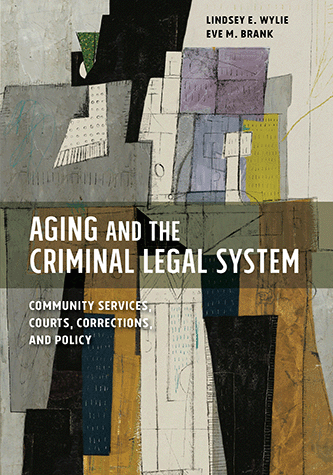
Aging and the Criminal Legal System
Community Services, Courts, Corrections, and Policy. With E.M. Brank. Division 41 American Psychology-Law book series, American Psychological Association. Brings behavioral science to the legal and psychological challenges older adults face across the criminal legal system.
View at APA →- Brank, E.M., & Wylie, L.E. (2021). Legal Responsibility Among the Young and the Elderly. Annual Review of Law and Social Science.
- Wylie, L.E., Knutson, A., & Greene, E. (2018). Extraordinary and Compelling: The Use of Compassionate Release Laws in the United States. Psychology, Public Policy, and Law.
10 more publications in this area
- Wylie, L.E., & Brank, E.M. (2025). Aging and the Criminal Legal System: Community Services, Courts, Corrections, and Policy. Division 41 American Psychology-Law book series, APA. (book)
- Wylie, L.E., & Hubner, S. (2023). Aging Prisoners. Handbook of Developmental Psychology and Law. (book chapter)
- Masters, J., Wylie, L.E., & Hubner, S. (2021). End-of-Life Planning: Normalizing the Process. Journal of Aging & Social Policy.
- Hamm, J., Wylie, L.E., & Brank, E.M. (2018). Measuring Older Adult Confidence in the Courts and Law Enforcement. Criminal Justice Policy Review.
- Wylie, L.E., Brank, E.M., & Bornstein, B.H. (2015). “Now Dear, What Do You Remember?” Patronizing Communication Toward Older Adults and Memory Performance. American Journal of Forensic Psychology.
- Wylie, L.E., Bergt, S., Haby, J., Brank, E.M., & Bornstein, B.L. (2015). Age and Lineup Type Differences in the Own-Race Bias. Psychology, Crime & Law.
- Brank, E.M., & Wylie, L.E. (2015). Elders and the Justice System. APA Handbook of Forensic Psychology. (book chapter)
- Brank, E.M., & Wylie, L.E. (2014). Differing Perspectives on Older Adult Caregiving. Journal of Applied Gerontology.
- Wylie, L.E., Patihis, L., McCuller, L.L., Davis, D., Brank, E.M., Loftus, E.F., & Bornstein, B.H. (2014). Misinformation Effects in Older Versus Younger Adults: A Meta-analysis and Review. The Elderly Eyewitness in Court. (book chapter)
- Brank, E.M., Wylie, L.E., & Hamm, J. (2012). Potential for Self-Reporting of Older Adult Maltreatment: An Empirical Examination. Elder Law Journal. (law review)
Juvenile and Emerging Adult Justice
Diversion, risk and needs, and the program features that change outcomes for young people in the system.
- Kotlaja, M., & Wylie, L.E. (2023). Electronically Monitored Youth: Stigma and Negative Social Functioning. Crime & Delinquency.
- Deal, T., Cienfuegos, A., & Wylie, L.E. (2022). Meeting the Needs of Emerging Adults in the Justice System. Trends in State Courts.
- Wylie, L.E., Clinkinbeard, S., & Hobbs, A. (2019). The Application of Risk–Needs Programming in a Juvenile Diversion Program. Criminal Justice and Behavior.
- Wylie, L.E., & Rufino, K.A. (2018). The Impact of Victimization and Mental Health Symptoms on Recidivism for Early System-Involved Juvenile Offenders. Law and Human Behavior.
9 more publications in this area
- Snyder, K.B., Rasposo-Hadley, A., Evans, C., Farrens, A., Burt, J., Armstrong, G., Garman, J., Wylie, L.E., & Foxall, M. (2022). Defense, Disrespect, and #Deadly: A Qualitative Exploration of Precursors to Youth Violence Informed Through Hospital-Based Violence Prevention Program Follow Up. Journal of Qualitative Criminal Justice & Criminology.
- Harris, C., & Wylie, L.E. (2021). Drug Testing Policies and Practices: Predicting Successful Outcomes Among Juveniles Participating in Pretrial Diversion. Justice Evaluation Journal.
- Reidelberger, K., Raposo-Hadley, A., Greenaway, J., Farrens, A., Burt, J., Wylie, L.E., Armstrong, G., Foxall, M., Bauman, Z., & Evans, C. (2021). Perceptions of Violence in Justice-Involved Youth. Surgery Open Science.
- Hobbs, A., Cienfuegos, A., & Wylie, L.E. (2021). Variations in Victim Presence in Restorative Youth Conferencing Programs: The Use of Surrogate Victims Increases Reparation Completion. Victims & Offenders.
- Hobbs, A.H., Kotlaja, M., & Wylie, L.E. (2018). Absenteeism Interventions: An Approach for Common Definitions in Statewide Program Evaluations. Justice Evaluation Journal.
- Wylie, L.E., & Armstrong, G. (2018). Child-to-Parent Violence: A Summary of Empirical Findings, Legal Issues, and Directions for Future Research. Contemporary Issues in Criminology. (book chapter)
- Armstrong, G.A., Cain, C.M., Wylie, L.E., Muftic, L.R., & Bouffard, L.A. (2018). Risk Factor Profile of Youth Incarcerated for Child to Parent Violence: A Nationally Representative Sample. Journal of Criminal Justice.
- Brank, E.M., Hoetger, L., Scott, B.L., & Wylie, L.E. (2015). Using Mail Surveys to Assess Perceptions of Law Enforcement Officers and Prosecuting Attorneys Regarding Parental Involvement Laws. “There Ought to Be a Law!” (Miller, Ed.). (book chapter)
- Wylie, L.E., Gibson, C.L., Brank, E.M., Smith, S.W., Fondacaro, M., Brown, V.E., & Miller, S.E. (2010). Assessing School and Student Predictors of Weapons Reporting. Youth Violence and Juvenile Justice.
Courts, Data and Communication
Helping courts measure, understand, and communicate the story of their own work.
- Wylie, L.E. (2025). Cultivating a Court’s Data STORY: A Guide for Court Leaders to Develop Storytelling Skills and Effective Communications. Trends in State Courts.
- Wylie, L.E., Hoetger, L.A., Hazen, K., Haby, J., & Brank, E.M. (2018). Four Decades of the Journal Law and Human Behavior: A Content Analysis. Scientometrics.
2 more publications in this area
- Andersen, J., Wylie, L.E., & Brank, E.M. (2017). Public Health Framing and Attribution: Analysis of the First Lady’s Remarks and News Coverage on Childhood Obesity. Cogent Social Sciences.
- Brank, E.M., & Wylie, L.E. (2013). Let’s Discuss: How Teaching About Discussions Can Lead to Better Student Outcomes. Journal of Scholarship of Teaching and Learning.
Evidence and Empirical Legal Studies
Empirical answers to legal questions, from arbitration outcomes to voice identification evidence.
- Franck, S., & Wylie, L.E. (2015). Predicting Outcomes in Investment Treaty Arbitration. Duke Law Journal. (law review)
- Wylie, L.E., & Brank, E.M. (2009). Assuming Elder Care Responsibility: Am I a Caregiver?. Journal of Empirical Legal Studies.
5 more publications in this area
- Wylie, L.E., Garman, J., Armstrong, G., Farrens, A., et al. (2022). Epidemiological Criminology and COVID: A Transdisciplinary Analysis of Violent Crime and Emergency Department Admissions During COVID. Trauma Care.
- Reed, K., Bornstein, B.H., Jeon, A., & Wylie, L.E. (2016). Problem Signs in Law School: Fostering Attorney Well-being Early in Professional Training. International Journal of Law and Psychiatry.
- King, C.M., Wylie, L.E., Brank, E.M., & Heilbrun, K.S. (2014). Disputed Paraphilia Diagnoses and Legal Decision Making: A Case Law Survey of Paraphilia NOS, Nonconsent. Psychology, Public Policy, and Law.
- Laub, C., Wylie, L.E., & Bornstein, B.H. (2013). Can the Courts Tell an Ear from an Eye? Legal Approaches to Voice Identification Evidence. Law & Psychology Review. (law review)
- Moberly, R., & Wylie, L.E. (2011). An Empirical Study of Whistleblower Policies in United States Corporate Codes of Ethics. Whistleblowing and Democratic Values. (book chapter)
The Applied Side
Program evaluation is where the methods meet the field: process and outcome evaluations, assessment tools, and research briefs for courts and justice agencies, at the National Center for State Courts and before that directing research for the Juvenile Justice Institute's Evidence-based Nebraska project. Most of these reports were published to agency sites that have since moved or retired them, so titles are listed here and copies are available on request.
National Center for State Courts: 9 reports
- Evaluation of Alaska's Drug/DUI Felony Courts (2025).
- Early Identification of Individuals with Behavioral Health Needs: Structured and Systematic Screening Practices to Reduce Orders for Competency Evaluations (2025).
- Evaluation of Illinois' Counties Swift, Certain, and Fair Probation Pilot Programs (2024-2025).
- Evaluation of Albuquerque, New Mexico's Therapeutic Courts (2024).
- A Renewed Analysis of the Expedited Actions Rules in Texas (2023).
- Outcome Evaluation of Kentucky's Pretrial Court Notification Service (2022).
- Process Evaluation of Kentucky's Pretrial Court Notification Service (2022).
- Competency to Stand Trial System Assessment Tool (2022).
- Data Framework for Promoting Civil Access to Justice (2022).
Juvenile Justice Institute, Evidence-based Nebraska: 12 reports
- Perceptions of Youth on Diversion, Research Brief #6 (2021).
- School Interventionists, Process and Outcome Evaluation (2021).
- Restorative Justice Conferencing Programs, Process and Outcome Evaluation (2021).
- Crisis Response Programs, Process and Outcome Evaluation (2021).
- Nebraska's Community-based Aid Mental Health Services, Research Brief #5 (2020).
- Reliability and Predictive Validity of Screener/Assessment in Juvenile Diversion (2020).
- Drug Testing in Juvenile Diversion Programs, Research Brief #3 (2019).
- Preventing Delinquency and Promoting Prosocial Activities, Research Brief #2 (2019).
- Mentoring Programs 2015 to 2018, Process and Outcome Evaluation (2018).
- Truancy Programs, Process and Outcome Evaluation (2018).
- Diversion Programs, Process and Outcome Evaluation (2017).
- Evidence-based Nebraska Annual Reports (FY 15-16 through FY 20-21) (2015-2021).
The Paper Trail
Figure · Citations
The twenty most-cited publications, colored by thread: about 870 citations in all
Citation counts from Google Scholar, August 2026. Duplicate Scholar records merged (counts summed). Fourteen more publications have 9 or fewer citations each (about 50 combined), and the newest works are not yet cited. Project reports and briefs are excluded; they are listed in the section above.
Curriculum Vitae
The full CV includes all peer-reviewed publications, book chapters, law reviews, funded grants, project reports, presentations, and courses taught.
Download CV PDFFull publication list on Google Scholar.